
One of the most consequential decisions in any real estate transaction is also one of the least understood: determining what a property is actually worth. Not what it is listed for. Not what the owner believes it deserves. Not what a neighbor’s sale suggested six months ago. What it is genuinely worth — today, in the current market, given its specific characteristics and the conditions governing its income or use.
Overpay and you spend years recovering equity you never needed to give away. Undersell and you leave money on the table that was rightfully yours. Make an offer based on a flawed valuation and your entire investment thesis — the return projections, the financing structure, the exit strategy — is built on a foundation that does not hold.
In 2026, with more data available than ever before and more sophisticated tools for analyzing it, there is no excuse for approaching a real estate transaction without a clear, defensible understanding of value. This guide gives you that understanding.
At Frédéric Murray Immeubles, property valuation is not a step in our process — it is the foundation of everything we do. Here is what every buyer, seller, and investor needs to know.

Why Valuation Is More Complex Than Most People Assume
The instinct most people have when estimating property value is to look at what similar properties nearby have sold for recently and assume their property is worth roughly the same. This instinct is not entirely wrong — comparable sales are indeed a core component of most valuation methodologies. But it is far from the complete picture, and relying on it exclusively leads to valuations that miss critical nuances.
Properties are not commodities. Two houses on the same street with the same square footage can differ meaningfully in value because of lot size, orientation, condition, ceiling height, parking, noise exposure, renovation quality, and dozens of other variables. Two income properties with identical purchase prices can have completely different values depending on the strength of their leases, the quality of their tenants, their maintenance history, and the trajectory of their local rental market.
Understanding valuation properly means understanding which methodology applies to which asset type, how to apply each methodology correctly, what adjustments are required for specific property characteristics, and how current market conditions affect the outputs. In 2026, that understanding is also shaped by new data tools, AI-assisted valuation models, and a transaction market that has gone through significant repricing over the past several years.
The Three Primary Valuation Methodologies
Professional appraisers and experienced real estate advisors use three core methodologies to determine property value. Each is appropriate for specific asset types, and the most robust valuations typically apply more than one.
The Sales Comparison Approach
The sales comparison approach — also called the direct comparison approach or the market approach — is the most widely used methodology for residential real estate. It establishes value by analyzing recent sales of comparable properties in the same market area and adjusting for differences between those comparables and the subject property.
The process begins with identifying comparables: properties that are sufficiently similar to the subject in terms of location, size, property type, age, and condition, and that have sold recently enough to reflect current market conditions. In a stable, liquid market, comparables from the past three to six months are standard. In a rapidly changing market, more recent comparables carry more weight.
Once comparables are identified, adjustments are made for every meaningful difference between each comparable and the subject property. A comparable that sold for $850,000 but had one fewer bathroom than the subject receives an upward adjustment. A comparable with a larger lot receives a downward adjustment. A comparable in a slightly more desirable street position receives a downward adjustment. These adjustments are based on market evidence of how buyers actually price these features — not on arbitrary rules of thumb.
The adjusted sale prices of the comparables form a range, and the subject property’s value is estimated within that range based on its overall comparison to the comparable set.

In 2026, the sales comparison approach is also informed by AI-assisted automated valuation models (AVMs) that aggregate large transaction datasets and apply statistical analysis to generate value estimates at speed. Tools like these have improved meaningfully and can serve as a useful starting reference — but they lack the judgment to handle unusual properties, rapidly changing micro-markets, or assets with unique characteristics. A professional advisor brings the contextual intelligence that no algorithm currently replicates.
The Income Approach
The income approach is the primary methodology for valuing income-producing properties — multi-unit residential buildings, commercial properties, mixed-use assets, and any property where the value is primarily derived from its ability to generate rental income rather than its appeal to owner-occupiers.
The core concept is straightforward: a property is worth what its income stream justifies, given the risk and return expectations of buyers in its market. The mechanics involve calculating the property’s net operating income (NOI) — gross rental income minus all operating expenses, before financing costs — and then dividing that NOI by an appropriate capitalization rate to arrive at a value estimate.
For example: a property generating $80,000 in annual NOI in a market where investors are purchasing comparable assets at a 5% cap rate has an indicated value of $1,600,000 ($80,000 ÷ 0.05). If the same property is in a market where the prevailing cap rate is 6%, the indicated value drops to approximately $1,333,000. The cap rate reflects the risk and return profile of the asset — lower cap rates indicate stronger markets, higher quality assets, or both.
In 2026, cap rates have normalized following several years of compression and then adjustment. Understanding current cap rate expectations for specific asset types in specific markets requires current transaction data — not general figures from industry publications. This is where working with an experienced advisor like the team at Frédéric Murray Immeubles provides direct, tangible value.
The income approach also includes a discounted cash flow (DCF) variant, which models the property’s income stream over a defined holding period and discounts it back to present value. This methodology is particularly useful for assets with complex lease structures, significant near-term capital requirements, or income that is expected to change materially over the holding period.
The Cost Approach
The cost approach estimates value by calculating what it would cost to reproduce or replace the existing improvements on the land, minus accrued depreciation, plus the value of the land itself. It is most applicable in situations where there are limited comparable sales (unique or special-use properties), where the property is relatively new, or where the improvements are specialized in a way that limits the applicability of market-based comparisons.
For most standard residential and commercial transactions, the cost approach serves as a secondary check rather than the primary value indicator. But for properties like newly constructed buildings, institutional facilities, or specialty commercial assets, it can be the most relevant methodology available.
Understanding that professional appraisers and experienced advisors triangulate across methodologies — rather than relying on a single one — gives you the right expectations for what a rigorous valuation actually involves.
Key Value Drivers in 2026: What Is Moving the Market
Beyond methodology, understanding which factors are most actively influencing property values in the current market helps you interpret valuations more intelligently and identify where value is being created or eroded.
Interest rate environment and financing costs. The cost of capital directly affects what buyers can afford to pay and what income-property investors can afford to carry. In 2026, with rate stabilization underway, the market has recalibrated from the volatility of recent years. Properties that were repriced downward as rates rose are beginning to recover as financing conditions improve. Buyers who understand this cycle are acquiring assets ahead of full value recovery.
Rental market conditions. For income properties, rising market rents directly increase NOI and therefore directly increase value. In markets where rental demand is outpacing supply — which describes a significant number of major Canadian and North American urban centers in 2026 — the income-driven value of well-located residential and commercial buildings is trending upward even without any physical improvement to the asset.
Property condition and capital deferred. Condition affects value directly and disproportionately. Buyers discount more aggressively for deferred maintenance than the actual cost of the work — because they are pricing in the uncertainty, the disruption, and the risk of discovering additional issues once work begins. Properties in genuinely excellent condition command premiums that reflect more than just the cost of the improvements.
Zoning and development potential. In many urban and suburban markets, the most significant component of a property’s value in 2026 is not what sits on the land today but what can be built there. Properties with zoning that permits higher density — through infill development, additional dwelling units, or outright redevelopment — carry a land value premium that reflects this optionality. Understanding zoning is therefore not just a due diligence exercise; it is a valuation input.
Common Valuation Mistakes That Cost Buyers and Sellers
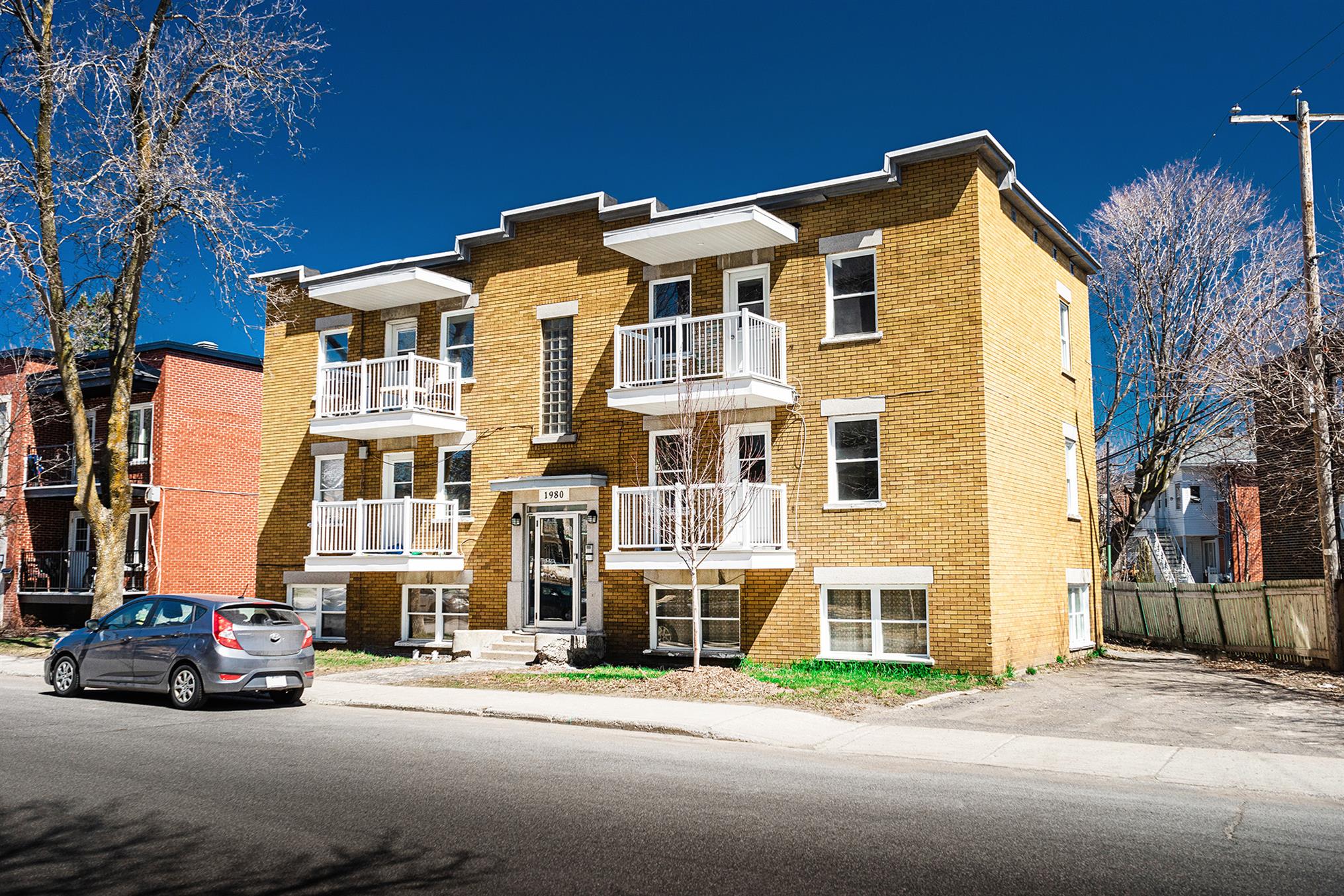
Regardless of which side of a transaction you are on, these are the valuation errors that appear most frequently in 2026 and carry the highest cost.
Using asking prices as a valuation reference. Asking prices reflect seller ambition, not market reality. The only prices that matter for valuation purposes are closed transaction prices — what buyers actually paid, under what conditions, in arm’s-length transactions. Listing prices are the starting point of a negotiation, not evidence of value.
Ignoring market conditions at the time of sale. A comparable that sold 14 months ago in a significantly different rate environment, under different supply conditions, or in a period of unusual buyer urgency may not be a valid reference for today’s market. Comparables must be evaluated in the context of the conditions under which they transacted — not just their price and physical attributes.
Applying residential valuation logic to income properties. Income properties are not valued on what buyers are willing to pay based on lifestyle appeal — they are valued on what the income stream justifies. A buyer who overpays for an income property because they emotionally connected with it is not making an investment — they are making a donation to the seller.
Over-relying on automated valuation tools. AVMs and online estimate tools are useful for orientation but not for decision-making. They cannot account for condition, micro-location factors, lease structure, pending capital requirements, or the dozens of other variables that a professional valuation incorporates. Use them as a starting point. Never use them as a conclusion.
Conflating assessed value with market value. Municipal assessments are used for property tax purposes. They are calculated on a cyclical basis, often lag actual market conditions significantly, and use methodologies designed for mass appraisal — not individual property valuation. A property’s assessed value may bear little relationship to its current market value in either direction.
Getting a Professional Valuation: When It Is Worth the Investment
For significant transactions, commissioning a formal appraisal from a qualified appraiser is an investment that consistently pays for itself. A professional appraisal provides a documented, defensible value estimate that can be used for financing purposes, estate planning, partnership structures, insurance coverage confirmation, and — when a transaction is contested — legal proceedings.
In the context of a purchase, a professional appraisal provides independent confirmation that the price you are paying reflects market reality. In the context of a sale, it provides the data foundation for a defensible asking price and a credible response to low offers. For income properties, it provides a rigorous income-approach analysis that quantifies the value of what you own or are acquiring.
At Frédéric Murray Immeubles, every transaction we advise on is grounded in a rigorous valuation analysis — not because it is required, but because we believe no serious real estate decision should be made without it. Whether you are buying, selling, or simply trying to understand the value of what you own, our team brings the expertise, the market data, and the analytical discipline to give you a clear, accurate picture.
Visit fredericmurrayimmeubles.com to speak with our team about your property and what it is genuinely worth in today’s market.