Commercial and mixed-use real estate has long been the domain of institutional investors and seasoned professionals. But in 2026, a growing number of private investors are recognizing what experienced operators have always known — that well-selected commercial and mixed-use buildings offer a combination of income stability, tenant quality, and long-term appreciation that purely residential investments rarely match.
The asset class is more complex than residential real estate. The due diligence is more demanding, the financing works differently, and the tenant relationships operate under a completely different legal and commercial framework. But for investors who take the time to understand how commercial and mixed-use buildings actually work, the rewards are proportionally significant.
At Frédéric Murray Immeubles, we specialize in connecting serious investors with commercial and mixed-use building opportunities across our markets. This guide is designed to give you a thorough grounding in what this investment category involves, what it demands, and how to approach it intelligently in 2026.
Why Commercial and Mixed-Use Buildings Deserve Serious Attention in 2026
The investment case for commercial and mixed-use real estate in 2026 rests on several converging fundamentals that make the asset class particularly compelling relative to alternatives.
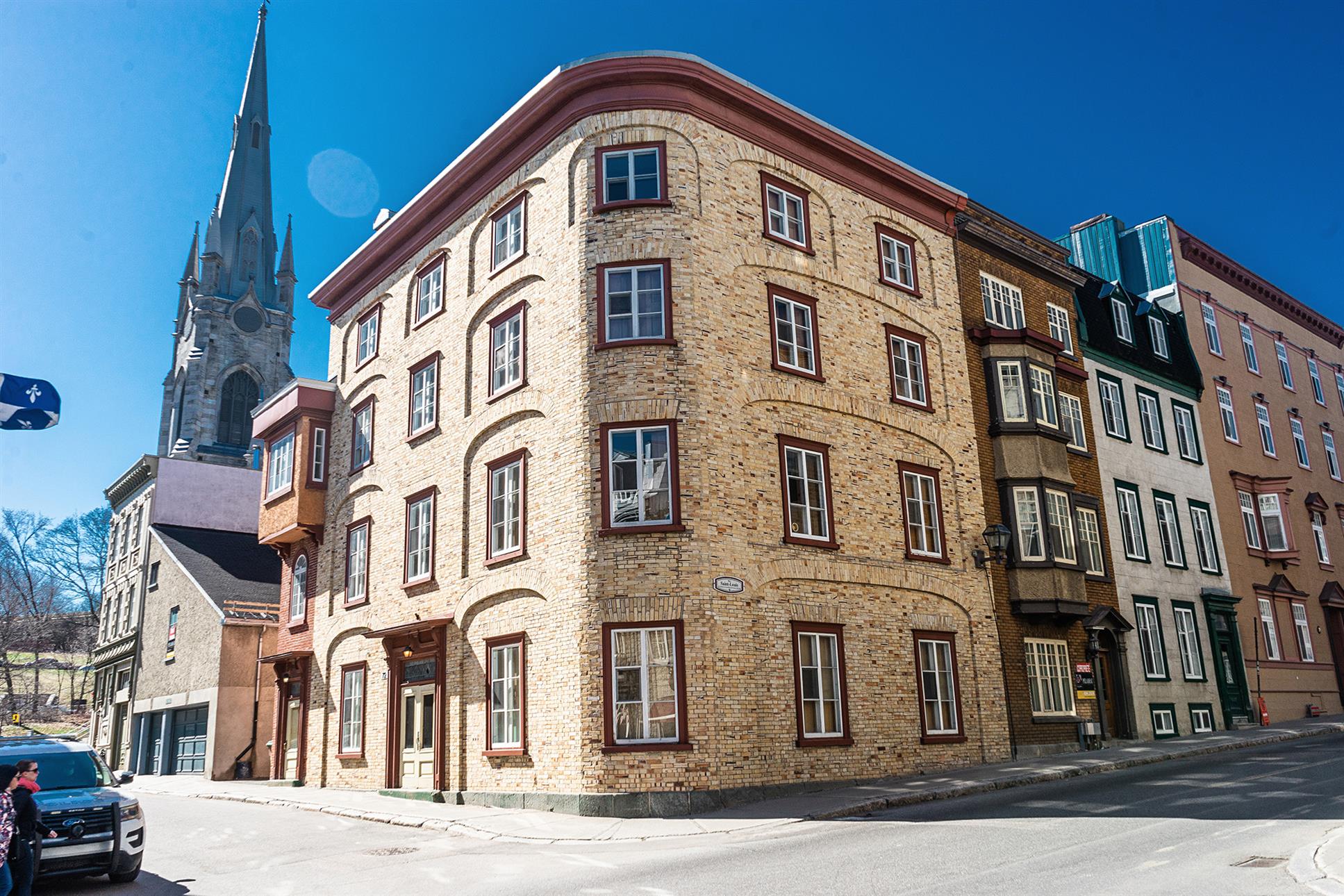
Longer lease terms create income stability — Commercial leases in Canada typically run three to ten years, compared to the twelve-month standard in residential tenancies. A building with multiple commercial tenants on staggered long-term leases generates highly predictable income that is far less vulnerable to the vacancy and turnover costs that characterize residential portfolios. For investors who value income reliability, this structural characteristic is significant.
Triple-net and modified gross lease structures shift operating costs to tenants — In many commercial lease arrangements, tenants are responsible for some or all of the operating costs of their space — property taxes, insurance, and maintenance — in addition to base rent. This fundamentally changes the income profile of the investment. A building with net leases in place is not just generating rental income; it is generating income with a substantially lower operating cost burden than a comparable residential asset.
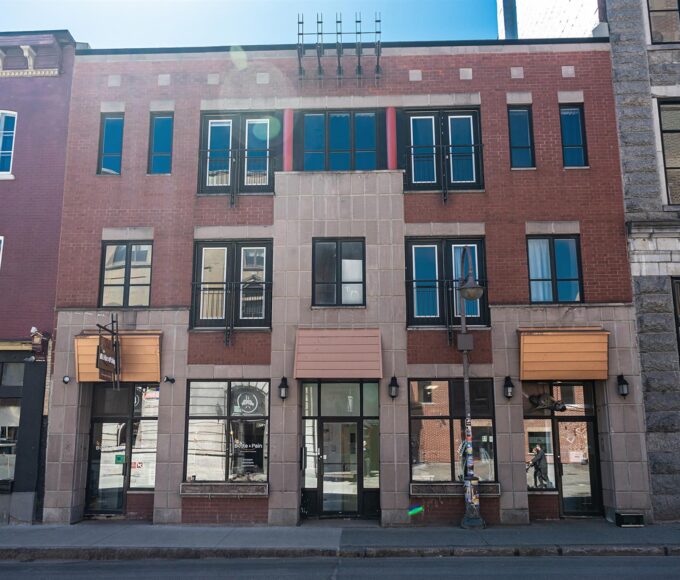
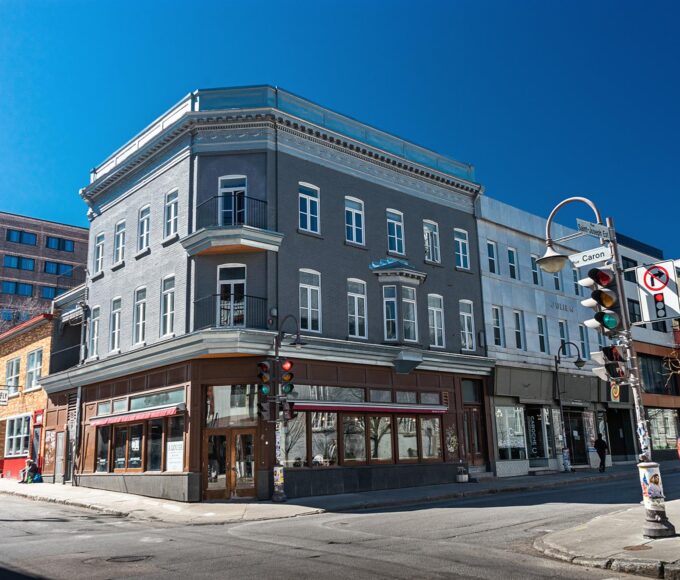
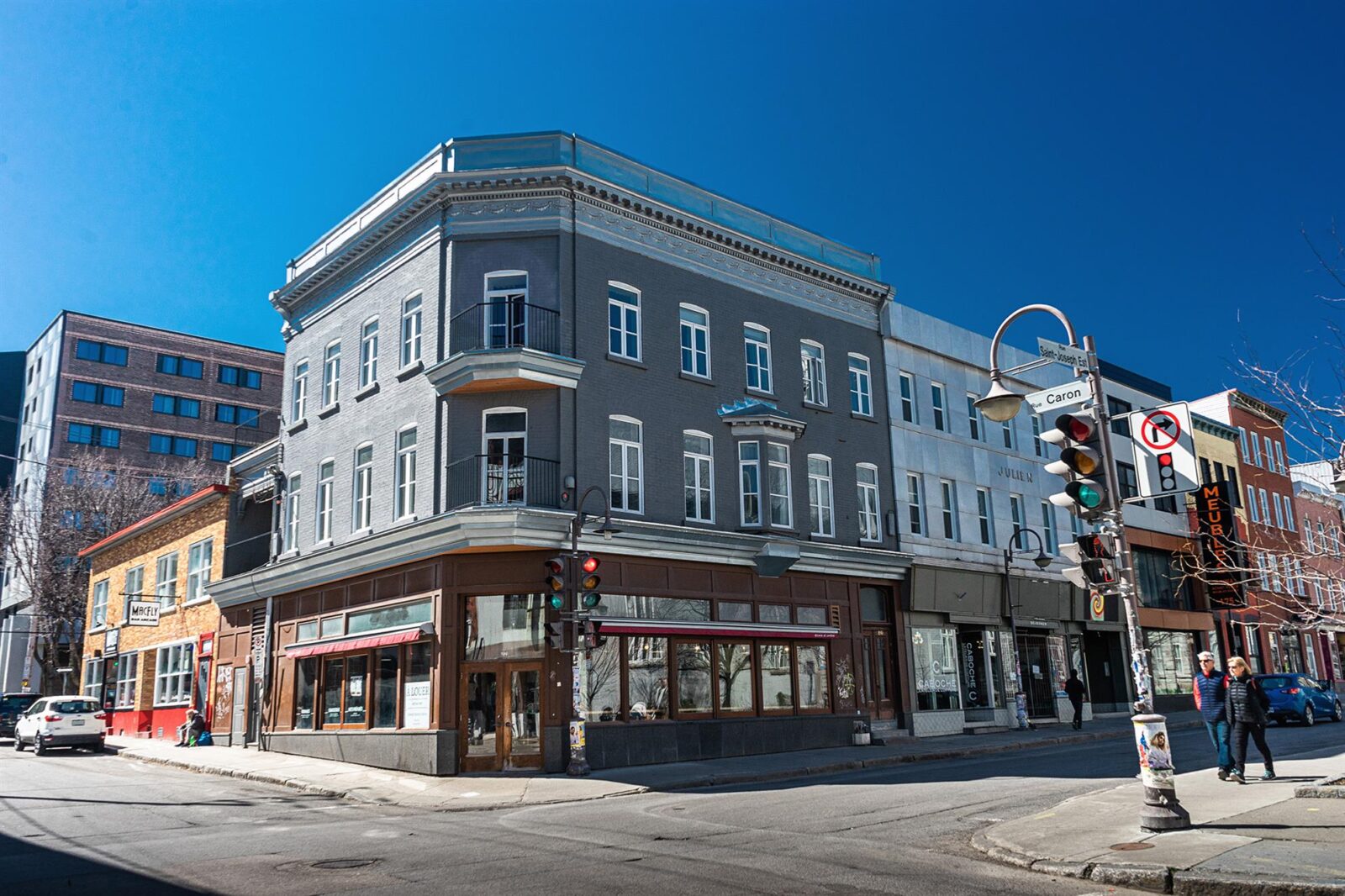
Mixed-use properties benefit from multiple demand drivers — A building that combines ground-floor retail or commercial space with upper-floor residential units captures value from both the commercial and residential rental markets simultaneously. In neighbourhoods where retail demand is strong, this structure can generate blended returns that exceed what either use type would produce independently.
Commercial real estate values are directly tied to income — Unlike residential properties, which are valued primarily by comparable sales, commercial buildings are valued based on the income they generate relative to market capitalization rates. This creates a direct relationship between operational excellence and asset value. An investor who improves a building’s NOI through better tenancy, reduced vacancy, or controlled operating costs directly increases the building’s market value.
Inflation protection through rent escalation clauses — Commercial leases in 2026 routinely include rent escalation provisions tied to CPI or fixed annual percentage increases. In an environment where inflation remains a consideration, owning income-producing real estate with built-in rent growth provides a meaningful hedge that fixed-income investments cannot replicate.
Understanding the Different Categories of Commercial and Mixed-Use Buildings
Before evaluating specific properties, investors need a clear understanding of the major categories within the commercial and mixed-use building space, because each carries distinct characteristics in terms of tenant profile, lease structure, management intensity, and market dynamics.
Retail strip buildings and high-street commercial — Buildings anchored by street-level retail tenants ranging from food and beverage operators to service businesses, professional offices, and specialty retailers. In 2026, retail real estate is highly bifurcated — essential service retail in strong neighbourhood locations commands reliable demand, while discretionary and destination retail continues to face structural headwinds from e-commerce. Location selectivity is critical in this category.
Office buildings — The office market in 2026 continues to navigate the long-term consequences of hybrid and remote work adoption. Class A office space in downtown cores has stabilized somewhat as employers have pushed for greater in-office attendance, but suburban office buildings and Class B assets face ongoing vacancy challenges. Investors entering this category in 2026 need to be clear-eyed about market conditions and selective about which specific assets and locations they target.
Mixed-use residential and commercial — Buildings that combine ground-floor commercial space with upper-floor residential apartments represent one of the most versatile and resilient categories in the current market. The residential component provides income stability and broad tenant demand while the commercial component adds income potential and, in the right locations, significant value to the overall asset. This category is particularly well-suited to investors who are comfortable managing both commercial and residential tenancy relationships.
Industrial and light commercial — Warehousing, light manufacturing, and industrial service buildings have been among the strongest performers in the commercial real estate space over the past several years, driven by e-commerce logistics demand and domestic supply chain reconfiguration. While cap rate compression has reduced the returns available from this category relative to earlier in the cycle, well-located industrial assets continue to offer strong income fundamentals in 2026.
Professional and medical office — Buildings occupied by healthcare providers, legal and accounting firms, financial services companies, and other professional tenants tend to offer superior lease stability and credit quality relative to general retail or office buildings. Tenants in these categories have high switching costs and established patient or client relationships tied to their physical location, which drives renewal rates and lease longevity.
How Commercial Buildings Are Valued and What That Means for Buyers
Understanding how commercial real estate is valued is foundational knowledge for any investor entering this market. The income-based valuation framework used for commercial buildings is both more transparent and more directly actionable than the comparable sales methodology used for residential properties.
The core valuation framework operates as follows:
Net operating income is the starting point — NOI is calculated as gross rental income, less vacancy allowance, less all operating expenses excluding debt service and depreciation. For a commercial building, this means accounting for base rents from all tenants, any additional rent recoveries under net lease structures, vacancy allowances appropriate to the market and property type, property taxes, insurance, property management fees, maintenance and repair costs, and capital reserves.
Capitalization rate converts NOI into value — The cap rate is the ratio of NOI to property value. If a building generates $200,000 in annual NOI and comparable properties in the same market are trading at a 5% cap rate, the indicated value of the building is $4,000,000. Understanding current cap rates by property type and location in your target market is essential context for evaluating any specific listing.
Cap rate trends in 2026 — Cap rates in most Canadian commercial real estate markets have adjusted upward from the historically compressed levels of 2020 to 2022, reflecting the higher interest rate environment. This means that buyers in 2026 are generally acquiring assets at lower prices relative to income than was possible in the preceding low-rate period. For investors with capital to deploy, this represents a more attractive entry point than was available two or three years ago.
The importance of rent roll quality — In commercial real estate, not all income is created equal. A building fully leased to a single national retail tenant on a long-term net lease is a fundamentally different investment than the same building occupied by three local independent operators on short-term gross leases, even if the gross income figures are similar. Tenant credit quality, lease term remaining, renewal options, and escalation provisions all affect the quality and durability of the income — and therefore the appropriate valuation.
Value-add opportunities in commercial buildings — Buildings with below-market rents, high vacancy, or operational inefficiencies offer the opportunity to improve NOI through active management, lease-up, or repositioning. The gap between in-place NOI and stabilized NOI represents potential value that sophisticated buyers can capture through execution. Quantifying this gap and the cost and risk of closing it is central to evaluating value-add commercial opportunities.
Due Diligence for Commercial Building Acquisitions
Commercial building due diligence is more extensive than residential due diligence, reflecting the greater complexity of the assets and the higher stakes involved. Investors who treat due diligence as a formality rather than a genuine investigative process expose themselves to risks that are entirely avoidable.
The key areas of commercial building due diligence include:
Physical inspection and engineering assessment — A full building condition assessment by a qualified commercial property engineer should cover structural systems, roofing and envelope, mechanical and electrical systems, plumbing, HVAC, elevators if applicable, fire suppression and life safety systems, parking and site infrastructure, and environmental conditions. The output should include a capital expenditure forecast covering both immediate requirements and projected costs over a ten-year horizon.
Lease review and tenant analysis — Every lease in the building should be reviewed by a real estate lawyer with commercial leasing experience. The review should identify lease expiry dates and renewal options, rent amounts and escalation provisions, tenant responsibilities under net or modified gross structures, exclusivity clauses that may restrict future tenants, assignment and subletting rights, and any side agreements or concessions not reflected in the primary lease document.
Tenant financial health assessment — Understanding the financial condition of existing tenants is important in commercial real estate in a way that has no real equivalent in residential tenancy. A building whose income is dependent on tenants facing financial difficulty is carrying significant hidden risk. Review available financial information on major tenants and assess their business model’s viability in the current market environment.
Title, zoning, and permitted use review — Confirm that the building’s current uses are permitted under existing zoning, that there are no title encumbrances that affect your intended use, and that any planned changes to the building or its tenancy mix are achievable under current and anticipated regulatory frameworks.
Environmental due diligence — A Phase 1 Environmental Site Assessment is standard practice for commercial building acquisitions. Depending on the building’s history and the findings of the Phase 1, a Phase 2 investigation involving soil and groundwater sampling may be required. Environmental liability in commercial real estate can be substantial and must be understood before closing.
Operating expense verification — Request and review actual operating expense invoices for at least the past two to three years. Compare the seller’s stated expenses against the actual documentation. Discrepancies between what is claimed and what is documented are common and must be reconciled before you can rely on the NOI figure you are buying.
Financing Commercial and Mixed-Use Buildings in 2026
Commercial real estate financing operates on fundamentally different principles than residential mortgage financing. Investors who approach commercial lenders with residential expectations are often surprised by the requirements and structure of commercial lending products.

Loan-to-value and debt service coverage — Commercial lenders in 2026 typically finance 60% to 75% of the appraised value of commercial and mixed-use buildings, with the specific ratio depending on property type, location, and lease profile. The debt service coverage ratio requirement — typically 1.20 to 1.35 times for commercial properties — is a binding constraint that may limit the loan size regardless of the purchase price or LTV calculation.
Commercial mortgage terms and amortization — Commercial mortgages typically have shorter terms than residential mortgages, with five-year terms being common and ten-year terms available for stabilized assets with strong lease profiles. Amortization periods for commercial buildings are generally twenty to twenty-five years. Understanding the refinancing risk at term maturity is an important part of commercial investment underwriting.
Lender specialization matters significantly — Commercial real estate lending is far more specialized than residential lending. The lender who holds your home mortgage is likely not the best option for a mixed-use commercial building. Banks, life insurance companies, mortgage investment corporations, and credit unions each have different appetites, products, and processes for commercial real estate. Working with a commercial mortgage broker who has established relationships across these lender types is a meaningful advantage.
The role of personal guarantees — Many commercial lenders require personal guarantees from the principals of the purchasing entity, particularly for assets below a certain size threshold or for borrowers without an established commercial lending track record. Understanding the personal liability implications of commercial mortgage structures is important before committing to a financing structure.
CMHC financing for mixed-use properties — Where a mixed-use building has a meaningful residential component, CMHC mortgage insurance may be available for a portion of the financing, potentially providing access to higher loan-to-value ratios and more favorable interest terms. The specific eligibility requirements for mixed-use assets are worth reviewing with your financing advisor before you begin the acquisition process.
Building a Tenant Relationship Strategy from Day One
In commercial real estate, your relationship with your tenants is your most important operational asset. Commercial tenants — particularly those on long-term leases — are partners in the performance of your building in a way that residential tenants are not. How you manage those relationships directly affects lease renewal rates, vacancy risk, and the reputation of your building in the broader tenant market.
The fundamentals of effective commercial tenant relationship management in 2026 include responding promptly and professionally to all maintenance and operational requests, being proactive about building improvements that support tenants’ businesses, communicating clearly about any changes to building operations or ownership, understanding each tenant’s business and the factors that drive their success, and approaching lease renewals as relationship negotiations rather than purely financial transactions.
Buildings with high tenant retention and strong landlord-tenant relationships command premium valuations in the market. Investors who prioritize tenant relationships from the moment of acquisition build more valuable assets than those who treat tenants as revenue line items.
At Frédéric Murray Immeubles, we bring the market knowledge, analytical expertise, and professional network that commercial and mixed-use building acquisitions demand. Whether you are evaluating your first commercial property or expanding an established portfolio, we are equipped to guide you through every dimension of the process.
Ready to explore commercial and mixed-use building investment in 2026? Frédéric Murray Immeubles provides expert guidance from initial market evaluation through acquisition and beyond. Visit fredericmurrayimmeubles.com to connect with our team today.