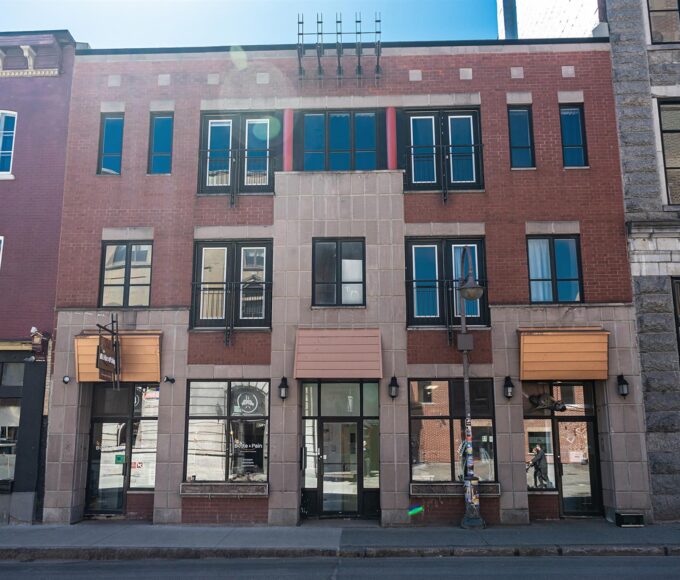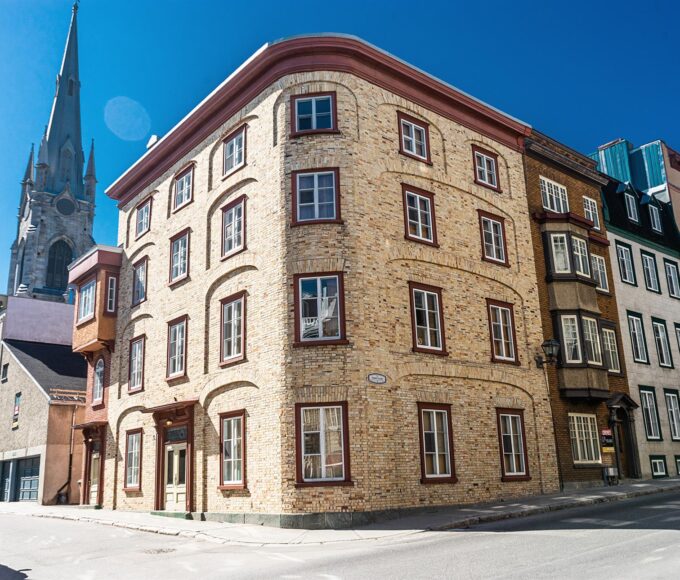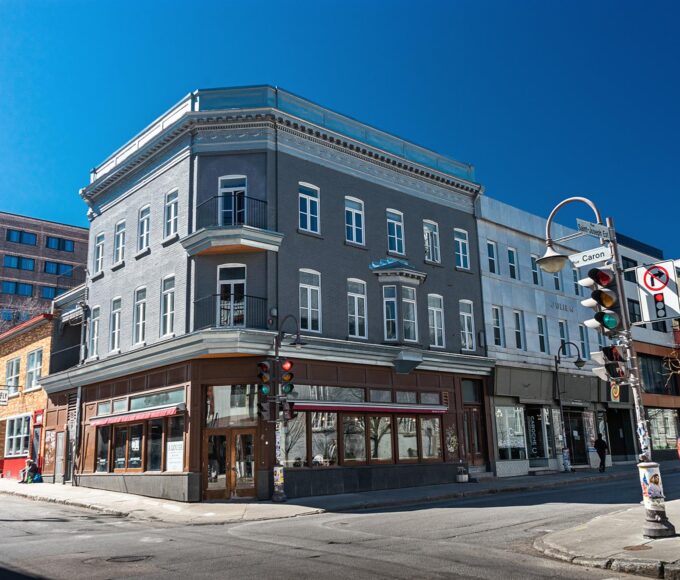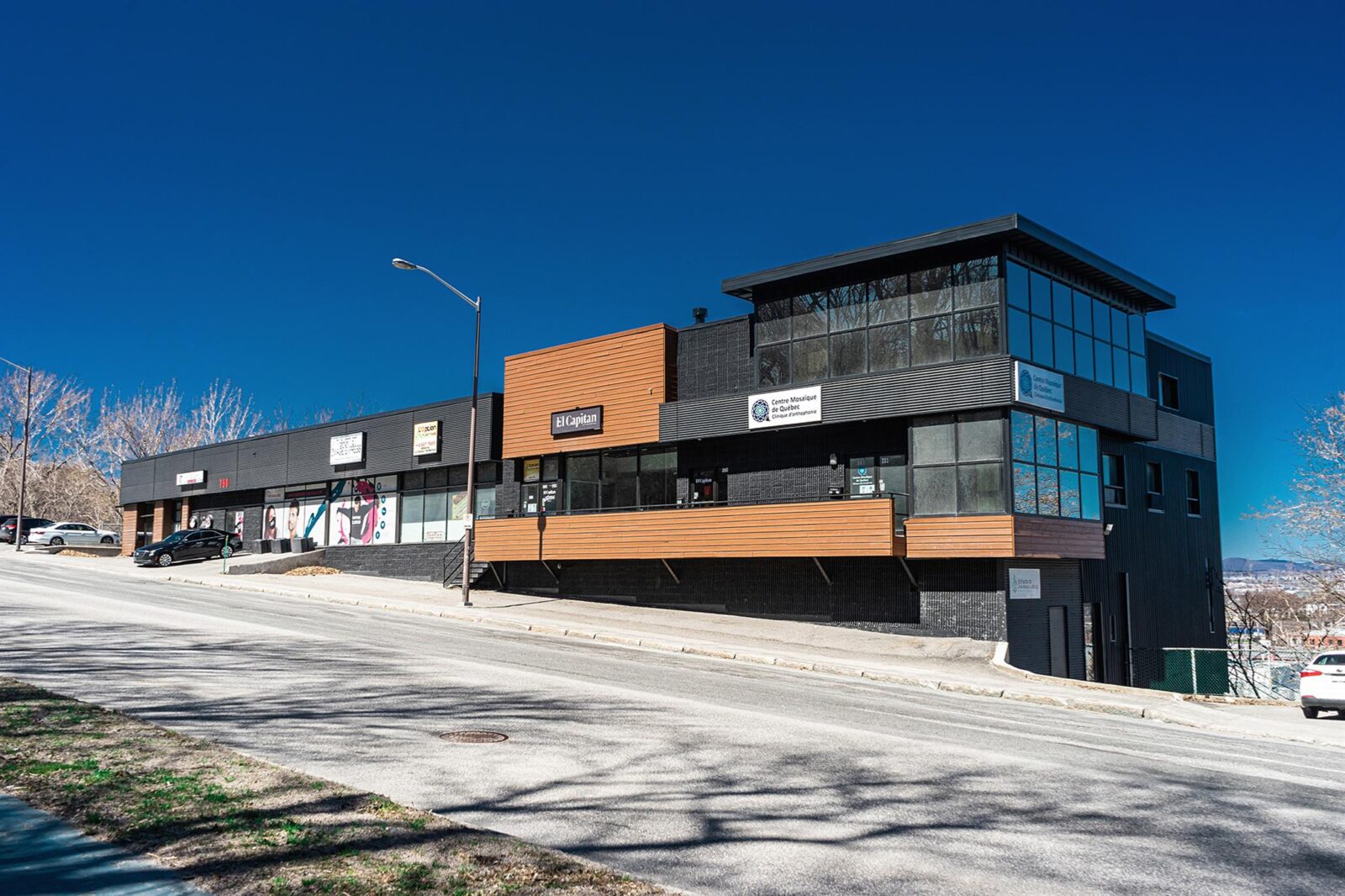
Commercial and mixed-use real estate in Quebec City is one of the most underrated investment categories in the province. While residential plex investors dominate conversations and headlines, the buyers quietly building durable wealth in 2026 often hold a mix of plex buildings, neighborhood retail strips, and the city’s signature commercial-ground-floor-residential-above buildings. The reason is simple: commercial leases are longer, tenant relationships are different in character than residential ones, and the right mixed-use property combines the stability of a small commercial lease with the upside of residential rent growth above it.
This guide is written for investors who already understand residential plex investing and are evaluating whether commercial or mixed-use is a sensible next step. It covers what is happening in the Quebec City commercial market this year, the property types worth considering, how the financial math differs from residential, the financing landscape, where to look, and the due diligence steps that protect first-time commercial buyers.
Why Quebec City Commercial Real Estate Looks Compelling in 2026
Several conditions favor commercial and mixed-use investing this year.
Office demand has stabilized, but not in the segment most investors fear. The vacancy headlines focused on downtown office towers do not describe the entire market. Neighborhood professional space — medical, dental, accounting, legal, design — has remained resilient. Tenants in these segments need physical locations close to their clients, sign multi-year leases, and rarely look for hybrid arrangements.
Neighborhood retail is healthier than national headlines suggest. Quebec City’s strong commercial corridors — Cartier, Maguire, Saint-Joseph, Saint-Jean — have steady foot traffic, established tenant bases, and limited new supply. The well-located storefront with a credible operator remains a strong investment.
Mixed-use buildings combine two income streams. A building with a stable ground-floor commercial tenant and three or four apartments above behaves more resiliently than either pure commercial or pure residential. When one segment softens, the other usually carries the building.
Cap rates are meaningfully higher than residential plex. Where Quebec City plex buildings trade in the 4.5–6.5% range, neighborhood commercial and mixed-use properties often trade between 6% and 8% — sometimes higher for less-prime locations. The premium reflects real risk, but for the right property, the math is materially better.
The Property Types Worth Understanding
Commercial real estate is not a single category. The four most relevant types for investors transitioning from residential plex in Quebec City:
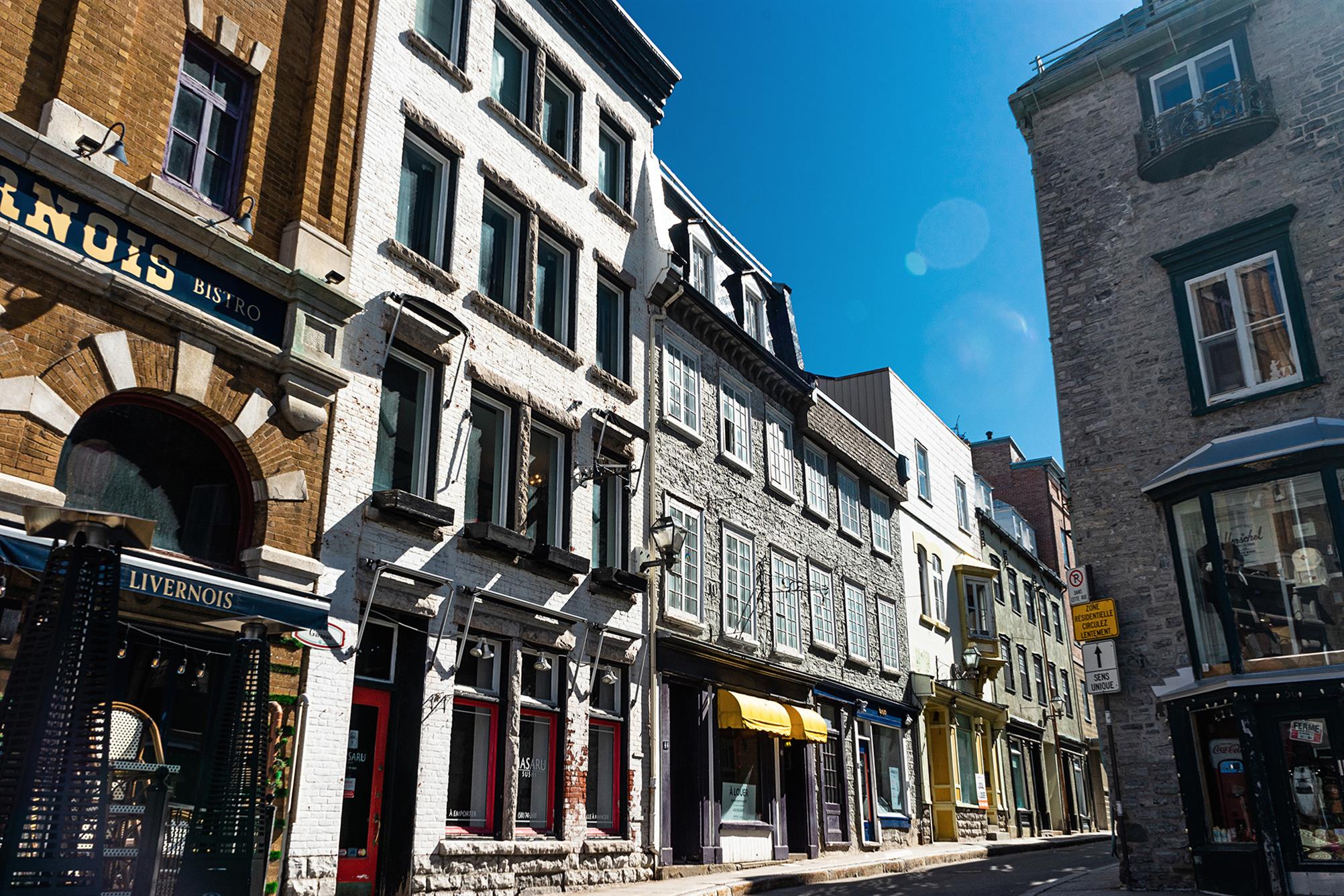
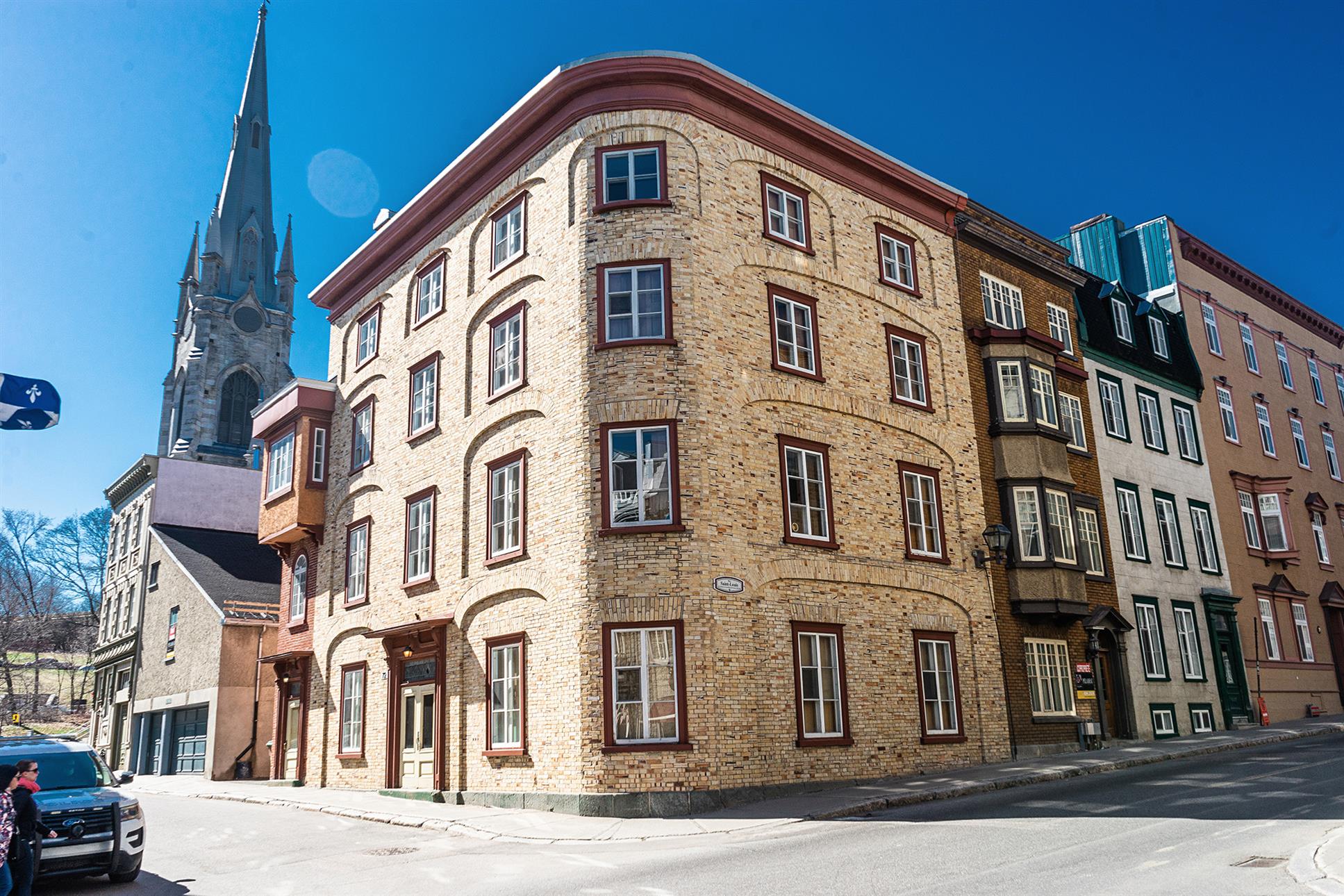
Mixed-use commercial-residential. The most accessible entry point. Typically a single building with one or two commercial units at street level and two to six residential units above. Financing often blends residential and commercial elements depending on the income split. Quebec City has thousands of these buildings, and they remain the most common path from residential plex to commercial investing.
Neighborhood retail strips. Single-building, multi-tenant retail along an established commercial corridor. Tenants are typically small local businesses — cafes, restaurants, salons, boutiques. The economics depend heavily on tenant quality and lease structure rather than the building itself.
Professional and medical office. Small office buildings or floors leased to professionals — clinicians, dentists, accountants, lawyers. Long leases, stable tenants, and lower management intensity than retail. Often overlooked by first-time commercial buyers, but a strong fit for investors who want stability.
Standalone retail or restaurant buildings. A single tenant occupies the entire property under a long-term lease. The investment becomes largely a question of the tenant’s creditworthiness and the lease terms. Higher concentration risk but often the simplest property to operate.
Investors who eventually want to layer commercial holdings on top of an existing residential portfolio often find the scaling framework in the analysis at Murray Immeubles useful for thinking about that transition holistically.
The Economics — How Commercial Math Differs From Residential
The fundamental shift between residential and commercial investing is that commercial properties are valued primarily on their income, not their replacement cost or comparable sales. Understanding this changes how you evaluate every deal.
Net Operating Income (NOI) is the central number. It is gross rent minus all operating expenses (taxes, insurance, common-area maintenance, management, vacancy reserve) but before financing. Commercial buyers underwrite NOI more rigorously than residential buyers, because the property’s value is literally a function of it.
Cap rate is NOI divided by purchase price. Commercial buyers compare cap rates across similar properties the way residential buyers compare price per square foot. A property’s “right” cap rate depends on its tenant quality, lease length, location strength, and building condition.
Lease structure shapes the math more than rent rate. Three common structures:
- Gross lease — the tenant pays a single rent; the landlord covers everything. Simpler but exposes the landlord to expense increases.
- Net lease — the tenant pays rent plus some operating expenses (taxes, insurance, maintenance). More common in retail and most stable for the landlord.
- Triple net (NNN) — the tenant pays rent plus taxes, insurance, and maintenance. Common for standalone tenants and the most landlord-friendly structure.
A property with $100,000 of gross rent under a gross lease and the same property under a triple net lease are not the same asset. The triple net version is materially more valuable.
Vacancy carries differently. A residential vacancy of one month is typically minor. A commercial vacancy of one month is meaningful, and a vacancy of six months is common when re-leasing a small retail unit. Underwriting needs to account for this.
Financing Realities for Commercial Property
Commercial financing differs from residential in nearly every dimension.
Down payments are higher. Expect 25–35% on most commercial purchases, sometimes more for higher-risk property types or smaller markets.
Amortizations are shorter. 20–25 years is common, compared to 25–30 years on residential.
Rates are slightly higher than residential commercial-mortgage rates, reflecting the underlying risk profile.
Underwriting focuses on the property’s NOI, not just the buyer’s personal income. The Debt Service Coverage Ratio (DSCR) — NOI divided by annual debt service — typically needs to clear 1.25x or higher.
Personal guarantees are common on smaller commercial deals, even when the property is technically owned in a corporation.
Lender relationships matter more. Commercial lending is a relationship business. A banker who has financed three of your deals will look at the fourth differently than a banker meeting you for the first time.
For investors evaluating mixed-use buildings specifically, the residential-versus-commercial split often determines which financing track applies. A building that is 75%+ residential by income typically qualifies under residential rules; one that is more commercial-weighted moves into commercial financing territory.
Where to Look in Quebec City for Commercial and Mixed-Use
Some corridors and neighborhoods consistently outperform others.
Cartier Street (Montcalm). A premium retail corridor with stable, established tenants and steady foot traffic. Mixed-use properties here trade at lower cap rates but with corresponding stability.
Saint-Joseph Street (Saint-Roch). The most active urban revitalization corridor of the past decade. Mixed-use buildings combining ground-floor retail or restaurants with residential above are common and have appreciated meaningfully.
Maguire Avenue (Sillery). A walkable, upscale neighborhood retail strip serving a wealthy local demographic. Smaller buildings, premium tenants, lower cap rates but exceptional stability.
Avenue du Maréchal-Pétain and surrounding Sainte-Foy commercial pockets. More suburban character, larger floor plates, and tenants that serve broader catchment areas.
Saint-Jean Street. Both within Old Quebec and in Saint-Jean-Baptiste. Tourist-influenced inside the walls; locally-driven outside them. Different risk profiles in each segment.
The 3e Avenue corridor in Limoilou. Less mature than Saint-Joseph but on a similar trajectory. Mixed-use opportunities at lower entry prices, with active neighborhood revitalization driving demand.
Due Diligence That Protects First-Time Commercial Buyers
Commercial due diligence is materially deeper than residential. The essentials:
- Tenant credit and history. For each tenant, review the lease, payment history, business financials where available, and length of operation. A signed lease with a weak operator is worse than a slightly shorter lease with a strong one.
- Lease review by a lawyer experienced in commercial real estate. Standard residential lease forms do not exist in commercial; every lease is its own document. Understand assignment rights, renewal options, escalation clauses, exclusive-use provisions, and default remedies.
- Estoppel certificates from each tenant confirming the lease terms, rent paid, and any side agreements. This protects you from surprises after closing.
- Environmental review. Many commercial buildings have historical uses — dry cleaning, automotive, small manufacturing — that can leave environmental obligations. A Phase I environmental assessment is standard.
- Building condition assessment. Roof, mechanicals, structure, accessibility compliance, and capital expense forecasting. Commercial buildings often defer maintenance, and the cost of catching up can be substantial.
- Municipal compliance and permitted use. Confirm zoning, allowable use, and any non-conforming status. Some Quebec City commercial buildings operate under historical permissions that do not survive a change of use.
Tenant Quality Matters More Than Building Quality
The most consistent rule in small commercial investing: a great building with weak tenants is a worse investment than a modest building with strong tenants. Tenant strength is measured by:
- Length of operation in this location — has the business been here three years or twenty?
- Diversification of their customer base — is the business heavily concentrated or broadly served?
- Operator commitment — does the operator live in the neighborhood, own the business, and treat it as a long-term endeavor?
- Lease length remaining — five years remaining on a tenant’s lease is a different asset than one year remaining.
- Industry resilience — neighborhood essentials, professional services, and food-and-beverage with established followings hold up better than discretionary retail.
A property with three solid tenants on five-year leases is fundamentally different from the same property with three rolling-over tenants on month-to-month arrangements, even at the same headline NOI.
Common Pitfalls for First-Time Commercial Buyers
After working with investors making this transition, several mistakes recur:
- Underestimating re-leasing time. When a commercial tenant leaves, the unit may sit for three to nine months before a new lease starts. Reserve capital for this.
- Overestimating tenant stickiness. Some tenants will renew. Many will not. Underwrite as if half your leases need renewal effort every five years.
- Buying into a corridor instead of a specific location. Two buildings on the same street can perform very differently based on visibility, parking, neighboring tenants, and foot-traffic patterns.
- Ignoring the management complexity. Commercial property management is more relationship-driven than residential. The team at Frédéric Murray Management handles both segments and is worth consulting before assuming you can self-manage your first commercial holding.
- Confusing personal taste with tenant demand. Your opinion of a restaurant or retailer is not investment data. Tenant performance and lease terms are.
Putting Commercial and Mixed-Use in Context
Commercial real estate is not for every investor, and even for those it suits, it is usually the second or third category to enter rather than the first. The investors who do best with it in Quebec City share a few patterns: they bring discipline from residential investing, they take tenant quality seriously, they accept that re-leasing periods are real, and they build relationships with commercial-focused lenders and lawyers before they need them.
Investors who eventually want to round out their portfolios with high-end single-family holdings often consult resources like Frédéric Murray Estates for the residential luxury side of the equation, since commercial cash flow and residential appreciation can complement each other well over a long hold.
If you are at the point where commercial or mixed-use property is the right next step in your strategy, the Frédéric Murray Immeubles team is available to discuss what is currently active in the market and how a thoughtful first commercial purchase might fit your existing portfolio.